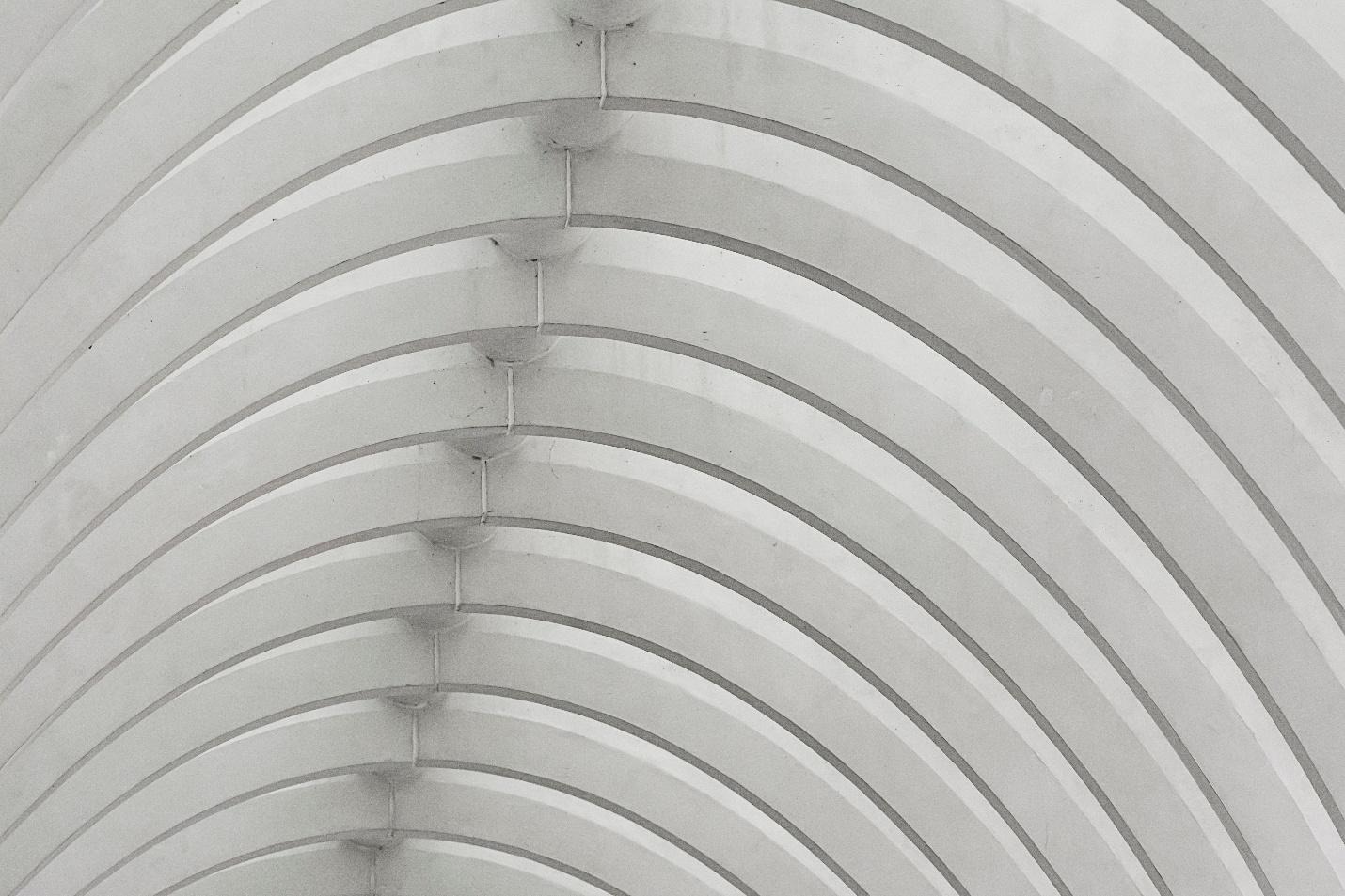
How Precise Geometry Creates Stronger, More Stable Roofs
Ever noticed how old barns, churches, and historic homes seem to stand forever while newer houses sometimes have roof problems after just a few decades? There’s actually a science behind that longevity, and it comes down to geometry, specifically, the shape of the roof.
Most modern homes have pitched roofs, which work fine. But if you want a roof that’s genuinely stronger, more stable, and better at handling whatever weather throws at it, there’s something special about arched designs that builders and architects have known about for centuries.
The truth is, the shape of your roof isn’t just aesthetic. Geometry directly affects how weight distributes, how water sheds, how wind forces are handled, and how long your roof will actually last. And when we talk about arches specifically, we’re talking about one of the most geometrically efficient shapes ever created.
If you’re planning a home build or a major renovation, understanding why arched roof geometry matters could change how you think about your project’s durability and long-term performance. Let’s explore what makes arches so special.
The Geometry of Strength: Why Shape Matters
The thing about roofs are that they do not just sit there passively. They are constantly dealing with forces such as weight, usually brought on by snow loads, rain and materials that may fall on the roof. The wind will constantly push and pull the designs, and water will try get through the gaps and seams. With water getting into small seams and gaps the temperature will either cause the water and the materials to expand or contract.
How well your roof handles these forces depends almost entirely on its geometry, the shape and angles involved. And this is where arches become really interesting.
Why geometry is structural
When you think about the flat surface and were to push down, all of the force concentrates directly at the point where you’re pushing. But if you curve that surface into an arch, something magical happens: the force spreads out and travels along the entire curve. Instead of one concentrated stress point, you have distributed stress along the whole structure.
This is why arches have been used in architecture for literally thousands of years. A Roman arch from 2,000 years ago can still stand while modern flat-roof buildings sometimes fail. The geometry is that powerful.
What Makes Arched Roofs Special
The arched roof design is curved and rises from one side and peaks in the middle, or it will follow a gradual curve rather than a sharp angle like a traditional pitched roof does. Best way to think of it is like the interior of a tunnel or the top of a cathedral which is usually smooth, curved, and geometrically elegant.
There are common types for residential use like barrel arches, dome arches, parabolic arches and gambrel-style arches. Many homeowners don’t think about the geometry of their roof but it is important to keep in mind heavy snow conditions, frequent storms and, or high winds. Choosing the right roof with arched geometry offers real advantages over more traditional roofing.
How Arches hand weight: The Geometry of Load Distribution.
Here’s where geometry gets practical. When snow accumulates on a traditional pitched roof with sharp angles, the weight concentrates along the ridge and at the eaves. That’s a lot of stress in specific spots.
With an arched roof, snow weight is distributed evenly along the entire curve. Instead of 500 pounds of stress at one point, you might have that same 500 pounds spread across the whole arch. This is why arches can handle more snow loads with less structural material.
The Mathematical advantage
Engineers call this “funicular geometry” the shape that’s mathematically optimal for handling loads. An arch is essentially the perfect shape for distributing weight downward and outward.
For a homeowner this means that your roof structure can be lighter which means less material and therefore less cost. The roof can also handle heavier loads which is useful for heavy snow throughout the winter. In time this means less strain on the supporting structures like the walls and the foundation meaning to longer structural life.
Real-world numbers:
A traditional pitched roof might support 20-30 pounds per square foot of snow load. An arched roof with proper geometry can often handle 40-50 pounds per square foot or more, same structure, better geometry, dramatically improved performance.
The arch advantage:
An arched roof’s curved surface has a fundamentally different relationship with wind. The curved surface naturally guides wind around it rather than catching it flat.
This is the same principle that makes airplane wings curved, aerodynamic efficiency comes from smooth curves, not flat planes.
With an arch:
- Wind passes more smoothly over the surface
- Less uplift force (which is what tries to rip roofs off in storms)
- Reduced turbulence and stress concentration
- More stable performance in high winds
Why this matters for homeowners:
If you live in an area with hurricanes, heavy storms, or consistent wind, roof geometry becomes a real safety factor. An arched roof with proper geometry can withstand wind speeds that would damage traditional roofs.
In testing, identical homes with different roof geometries show that arches consistently handle wind better. The difference isn’t small, it’s often 15-20% better performance.
Arched Roofs in Different Climates
Cold, snowy climates:
Arches shine here. Snow slides off naturally. Ice dams don’t form. The structure handles heavy loads. A homeowner in Minnesota or Vermont with an arched roof has dramatically fewer winter headaches.
Hot, humid climates:
Arches handle moisture well because water sheds efficiently. In tropical or subtropical areas, the reduced standing water means less mold and moisture infiltration. Geometry helps here too.
High-wind areas:
Hurricanes and tornadoes create lateral forces that traditional roofs struggle with. Arches handle wind better aerodynamically. Coastal homes and tornado-zone homes benefit significantly from arch geometry.
Moderate climates:
Even in mild weather areas, arches still outperform traditional roofs over decades. The benefits are just less dramatic than in extreme climates.
Geometry Creates longevity
Here’s what it comes down to: the shape of your roof directly affects how long your roof lasts and how well it performs. Arched geometry is more efficient, handles loads better, sheds water more reliably, and resists wind more effectively than traditional pitched designs.
At the end of the day, your roof is your most important structure. Investing in geometry that actually works is an investment in your home’s long-term health and your peace of mind.