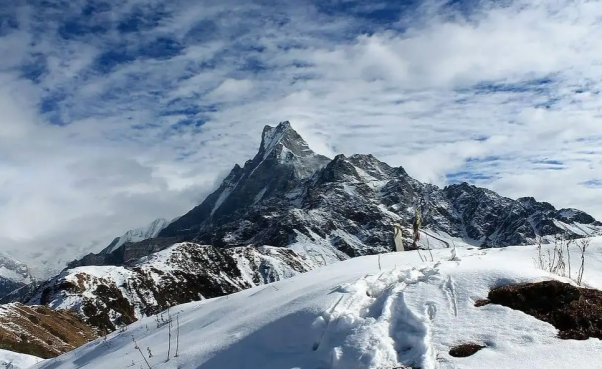
The dramatic landscapes I saw on my journey through Drass
I had mostly heard how cold it is in Drass. Before my trip, I probably thought of it more as a stop on the way to Ladakh than as a location I would spend much time observing. Almost immediately after I arrived in the valley, that changed.
Even though Drass has massive mountains, I was surprised by how intimate and commanding they appeared from the road. The scenery alternated between vast expanses of sky, flowing streams, green spots, and stark rocky slopes. Although I had anticipated a lovely landscape, I was surprised by how dramatic it seemed. I had also done my hotel booking online before the trip, which made it easier to focus on the road and the changing landscape once I reached Drass.
The road into Drass kept getting better
One of my favourite aspects was the trip itself. The terrain became more rugged as the route ascended into Drass. There was little of the slow change I associate with many hill stations; instead, the mountains appeared to stand out from the valley.
Instead of staring at the route on my phone, I kept finding myself staring out the window. Sections of the road paralleled the Suru River, with mountains on either side and sporadic small communities. It was one of those trips where it was nearly impossible not to stop. The view was different every few kilometres.
The Suru River changed the landscape of Drass completely
Throughout the trip, the Suru River became a frequent addition. In several areas, it ran silently beneath the road. In others, it developed into a far more prominent visual feature, slicing through the valley as the mountains rose behind it.
The contrast appealed to me. The river gave an otherwise vast and motionless environment a sense of movement. The valley appeared inhabited rather than entirely isolated, with small agricultural areas and greener patches of soil surrounding the river. Until I glanced up at the mountains once more, it was easy to forget how high I was.
Tiger Hill in Drass was impossible to ignore
I couldn’t go through Drass without thinking about Tiger Hill. The mountain’s historical significance is inextricably linked to the Kargil War and is inseparable from the surrounding scenery. I had a new perspective on why the surrounding landscape was so strategically significant.
The smaller valleys of Drass were just as beautiful
I was really taken aback by how much I liked the less well-known areas surrounding Drass. There were farmed settlements, streams beside highways, and tiny green valleys nestled between the mountains. The contrast between the vast rocky hills and the verdant valley floor is especially noticeable in the warmer months.
I really enjoyed watching everyday life go on in such a stunning environment. Despite their small size compared to the mountains, fields, homes, and grazing animals reminded me that Drass is more than just a tourist destination.
Final thoughts
Drass’s striking scenery stuck with me because it was more than just lovely. The massive mountains and Suru Valley were striking visuals, but the Kargil War’s history added another layer to the environment. Booking my hotel beforehand also meant I could spend more time taking in the surroundings rather than worrying about finding a place to stay.
The river, villages, and verdant valley floors revealed a gentler side of the area, while Tiger Hill and the surrounding peaks helped me understand the landscape’s size. This was more evident at the Drass War Memorial.
Visit this website: Modern Bathroom Solutions: Efficiency Meets Style
I arrived thinking of Drass as a place on the road to somewhere else. I left feeling that the journey through the valley was itself one of the most memorable parts of the trip. Sometimes the places that seem like stops on a route deserve to be destinations in their own right.