How UK Celebrity Culture Has Normalised CBD in 2026?
There was a time, not so long ago, when CBD in the UK occupied an awkward cultural space. It was sold in vape shops next to questionable products, marketed in language that didn’t quite make sense, and treated by most mainstream media as either a niche wellness fad or a thinly veiled cousin of cannabis. The conversation in 2026 looks completely different. CBD has moved firmly into the centre of UK lifestyle culture, and a big part of that shift is owed to how British celebrity culture has gradually — and very deliberately — normalised it. Today, CBD products from premium UK brands like OriginalsCBD sit comfortably alongside protein powders, mushroom coffees, and recovery wearables in the wellness vocabularies of UK actors, athletes, presenters, and musicians.
This article isn’t about naming names or repeating gossip. It’s about the cultural arc itself — how the UK went from “CBD is suspicious” to “CBD is dinner-party normal” in under a decade, and what that means for everyday UK consumers buying CBD in 2026.
The Starting Point: Why CBD Was a Cultural Outsider
To appreciate how far the conversation has moved, it helps to remember where it started. As recently as the late 2010s, CBD in the UK was tangled up with three separate cultural problems.
First, it was lumped in with cannabis, despite being a fundamentally different product under UK law. Reporting on CBD often borrowed visual and verbal cues from cannabis coverage, which created confusion among consumers who weren’t sure what was legal and what wasn’t.
Second, early UK CBD products were uneven. Some were excellent, but many were under-dosed, poorly labelled, or sold by retailers who didn’t seem to understand the product themselves. That hurt consumer trust across the category for years.
Third, the wellness language used to market CBD didn’t yet fit British sensibilities. American-style “miracle cure” framing fell flat with UK consumers, and the resulting awkwardness made the whole category feel a bit suspect.
Celebrity culture wouldn’t fix all of those problems on its own. But it would, eventually, do the most important thing: make CBD feel familiar.
How UK Celebrities Quietly Shifted the Conversation
The normalisation didn’t happen with one big announcement. It happened in the small, accumulating ways that cultural shifts always happen.
UK actors began mentioning CBD in interviews — usually in passing, often in the context of recovery from long shoots, late nights, or physically demanding roles. UK athletes, particularly in rugby, boxing, and football, started referencing CBD products in their post-match recovery routines. Podcast culture in the UK exploded, and with it came hours of unscripted, conversational content in which CBD came up naturally rather than being formally endorsed. Lifestyle magazines and Sunday supplements began folding CBD products into their wellness gift guides without flagging them as unusual.
None of these moments were “announcements.” That’s the point. CBD was being woven into the same casual lifestyle vocabulary that already included magnesium, ashwagandha, and sleep trackers. By the time anyone noticed, the conversation had moved.
The Tipping Point: Why 2026 Specifically
Several forces have converged in 2026 to make this the year CBD’s normalisation in the UK feels complete rather than emerging.
Alcohol culture has shifted. UK adults are drinking measurably less, particularly under 40, and the search for alcohol alternatives has pushed CBD into the spotlight as part of broader “soft sobriety” trends. Public figures leading that conversation have helped lift CBD along with it.
The quality floor has risen sharply. UK CBD products in 2026 are dramatically better than they were even three years ago. Premium brands like OriginalsCBD have raised expectations around lab testing, packaging, freshness, and customer experience — and that quality is what allows celebrity-adjacent media coverage to treat CBD as a serious wellness category rather than a fringe product.
Regulation has matured. The UK’s Novel Foods framework and the 1mg-per-container THC limit have given the category a clear legal spine. That clarity has made mainstream UK media more comfortable covering CBD without legal hedging on every paragraph, which in turn has made celebrity wellness coverage involving CBD feel routine.
Wellness culture has gone mainstream. Cold plunges, breathwork, magnesium, mushroom coffee, recovery wearables — the entire vocabulary of modern wellness is now part of UK celebrity lifestyle media. CBD fits into that vocabulary effortlessly, and once it became one ingredient in a larger picture, the cultural awkwardness around it disappeared.
What This Has Meant for Everyday UK Consumers
When celebrity culture normalises something, the practical effect on regular consumers tends to be larger than people give it credit for. The barriers that used to stop a curious UK adult from trying CBD — the social awkwardness, the legal uncertainty, the worry about being judged — have all softened significantly.
A new UK CBD customer in 2026 typically arrives in the category through one of three doors: a wellness-led conversation with friends, a podcast or magazine recommendation, or a quiet personal interest in alcohol alternatives. None of those entry points exist without the cultural normalisation that celebrity-adjacent media has driven over the past few years.
That normalisation has also changed what UK consumers expect from a CBD brand. The bar is much higher now. People expect:
A clear Certificate of Analysis on every product. Packaging that wouldn’t look out of place in a premium skincare cupboard. Fast, discreet delivery. Honest, ASA-compliant marketing that doesn’t make medical claims. And, crucially, a product experience that justifies the premium positioning rather than relying on hype.
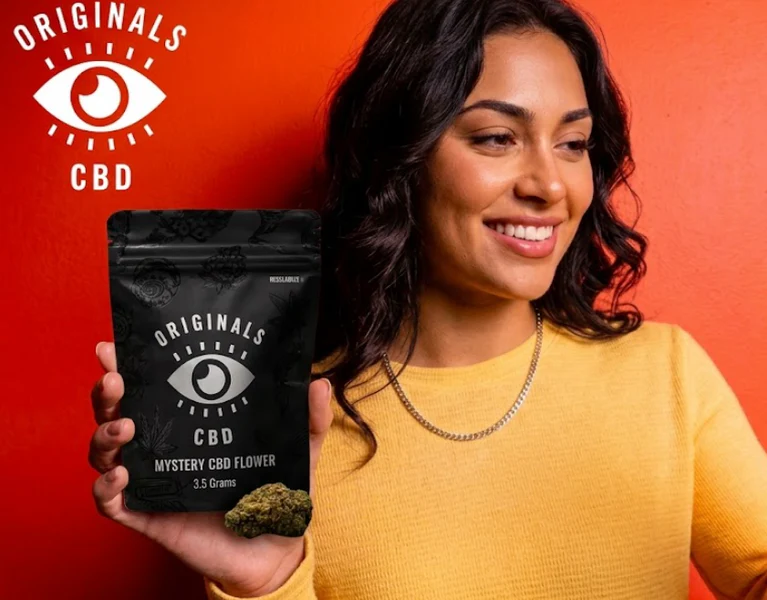
OriginalsCBD has become one of the brands UK customers reach for precisely because it meets that higher bar. Hand-trimmed flower, lab-tested batches, transparent COAs, fast next-day delivery, and packaging that fits comfortably into a modern wellness aesthetic — these are the standards mainstream UK consumers now expect, and only a handful of brands actually deliver them consistently.
The UK Legal Picture: Worth Restating
Because cultural normalisation can sometimes blur the legal picture, it’s worth being precise about where UK law sits in 2026.
CBD is legal to buy, possess, and use in the UK, provided products contain no more than 1mg of THC per container. That limit is significantly stricter than the equivalent rules in the US or most of the EU, which is why UK-compliant CBD is sourced from EU-approved industrial hemp genetics and lab-tested before sale. CBD itself is not a controlled substance in the UK; THC is, which is why the 1mg ceiling exists.
Under ASA rules, UK CBD products are sold as food supplements or wellness items, not as medicines, and reputable UK brands are careful to frame their marketing accordingly. None of the cultural normalisation discussed in this article changes those rules — it simply means more UK consumers understand them.
What Comes Next
The interesting question isn’t whether CBD will continue to normalise in the UK — it already has. The question is what happens next. A few likely directions:
CBD will increasingly be treated as a default category in UK wellness retail, much like protein powder or magnesium is today. Premium UK brands will continue to pull market share away from generic, cheaply produced products as consumers learn to distinguish between them. And CBD’s cultural pairing with alcohol alternatives, recovery culture, and intentional living will likely deepen, particularly among UK adults between 25 and 45.
For UK consumers, all of this points in the same practical direction: the category is better, safer, more transparent, and more accessible than it has ever been.
Final Thoughts
UK celebrity culture didn’t single-handedly create the modern CBD market — but it did something arguably more important. It quietly removed the cultural friction that used to surround the category, and made CBD feel like a normal, considered part of modern adult wellbeing. That cultural work, accumulated across hundreds of small moments over several years, is what allowed brands like OriginalsCBD to step into the mainstream without needing to fight for permission.
In 2026, buying premium UK CBD is no longer a fringe wellness choice. It’s just a wellness choice — and that, more than anything, is the real story of how the conversation has changed.
This article is intended as cultural and lifestyle commentary. CBD products in the UK are sold as food supplements and wellness products and are not marketed as treatments for any medical condition. Always buy from reputable UK retailers and check for a Certificate of Analysis before purchasing.