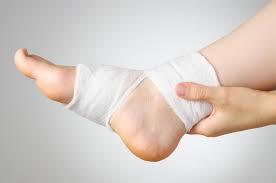
How to Prevent Repeated Ankle Sprains Using Proper Ankle Support
If you have ever felt that sickening pop in your ankle while just walking down the street, you know exactly how frustrating a sprain can be. It starts with a split second of clumsiness and ends with weeks of icing, elevating, and wondering why your body decided to betray you over a slightly uneven sidewalk.
The real problem isn’t just the first sprain. It is the second, third, and fourth ones. Once you stretch those ligaments out, your ankle becomes a bit like a loose door hinge. If you don’t fix the hinge or support it properly, it is going to keep swinging the wrong way.
Here is a clear look at how to stop the cycle of repeated sprains using the right support and a bit of common sense.
Why Your Ankle Keeps Giving Out
Before we talk about braces and tape, we need to understand the mechanics. Your ankle relies on ligaments which are like tough rubber bands, to keep your bones in place. When you sprain it, you overstretch or tear those bands.
- Loss of Proprioception: This is a fancy word for your brain’s ability to know where your foot is without looking at it. After a sprain, the sensors in your ankle get dull. You think your foot is flat, but it’s actually tilted, leading to another roll.
- Mechanical Instability: The ligaments are literally longer and looser than they used to be.
- Muscle Weakness: Because you rested the injury, the muscles around the joint got weak. Now, they can’t snap the foot back into place when you stumble.
Choosing the Right Type of Support
Not all ankle supports are created equal. Buying the wrong one is a waste of money and might give you a false sense of security. You need to match the support to your activity level.
1. Compression Sleeves
These are basically tight socks without heels or toes.
- What they do: They provide awareness. The tightness reminds your brain that the ankle exists.
- What they don’t do: They provide zero structural support. They will not stop your ankle from rolling if you step in a hole.
- When to use: Daily wear if you have minor swelling or just want to feel a bit more secure during a walk.
2. Lace-Up Braces
These look like the top of a high-top boot and usually have laces and straps that mimic medical taping.
- What they do: These are the gold standard for preventing re-injury. They physically limit how far your ankle can move side-to-side.
- What they don’t do: They can be bulky and might require you to wear a slightly larger shoe.
- When to use: During sports, hiking, or any activity on uneven ground.
3. Stirrup Braces
These have hard plastic shells on the sides and are usually held on by velcro.
- What they do: They focus entirely on preventing the inward roll.
- When to use: Usually in the first few weeks after a bad injury while you are still limping.
The Daily Routine for Ankle Safety
Support isn’t just something you wear. It is also how you handle your daily life. If you want to stop the sprain-rest-repeat cycle, you have to be intentional.
Check Your Footwear
Your shoes are the foundation of your ankle support. If the heels of your shoes are worn down on one side, they are actively trying to trip you.
- Throw away old shoes: If the foam is compressed, the shoe will tilt your foot outward.
- Avoid platforms: The higher you are off the ground, the more leverage there is to snap your ankle over.
- Width matters: Look for shoes with a wider outsole at the heel. A wider base is harder to tip over.
How to Wear a Brace Correctly
Most people put on a brace too loosely because they want to be comfortable. A loose brace is just an expensive sock.
- Tightness: It should be snug enough that you feel a bit of pressure, but your toes should not turn blue or feel tingly.
- The Figure-Eight: if you are using a brace with straps, make sure the straps wrap under the heel and back up. This mimics the way a natural ligament holds the heel bone.
- Sock Layering: Always wear a thin, moisture-wicking sock under the brace. This prevents blisters and skin irritation that might tempt you to stop wearing the support altogether.
When to Stop Relying on Support
There is a trap here. If you wear a heavy-duty brace 24/7 for months, the muscles in your ankle will decide they don’t need to work anymore. They will get even weaker.
- Phase 1: Wear the brace for all weight-bearing activities.
- Phase 2: Wear the brace only for high-risk activities like running or walking on grass. Wear a light sleeve or nothing at all while at home on flat floors.
- Phase 3: Use the brace only when you feel fatigued. Most sprains happen at the end of the day when your muscles are tired and stop protecting the joint.
Common Mistakes People Make
- Ignoring the Near Misses: If you almost roll your ankle but catch yourself, that is a sign your stability is failing. Don’t wait for a full tear to start using support.
- Skipping Rehab: A brace is a crutch, not a cure. You still need to do calf raises and towel scrunches with your toes to build the muscle back up.
- Buying Cheap: Pharmacy-grade elastic bandages are mostly useless for preventing rolls. Invest in an ankle binder with non-stretch nylon straps.
Summary Checklist for Long-Term Health
To keep your ankles stable and avoid another session on the couch with a bag of frozen peas, follow these simple rules:
- Identify the risk: If you are going somewhere with uneven ground, put the brace on before you leave.
- Update the gear: Replace your sneakers every 300 to 500 miles.
- Strengthen the base: Spend five minutes a day standing on one leg or doing toe raises.
- Listen to pain: If the ankle feels achy or loose, it is telling you it needs extra support today.
Stopping repeated sprains is about being proactive rather than reactive. You can’t always control where you step, but you can control how prepared your ankle is for the impact. Wear the support, do the exercises, and eventually, you really won’t have to think about your feet every time you take a step.